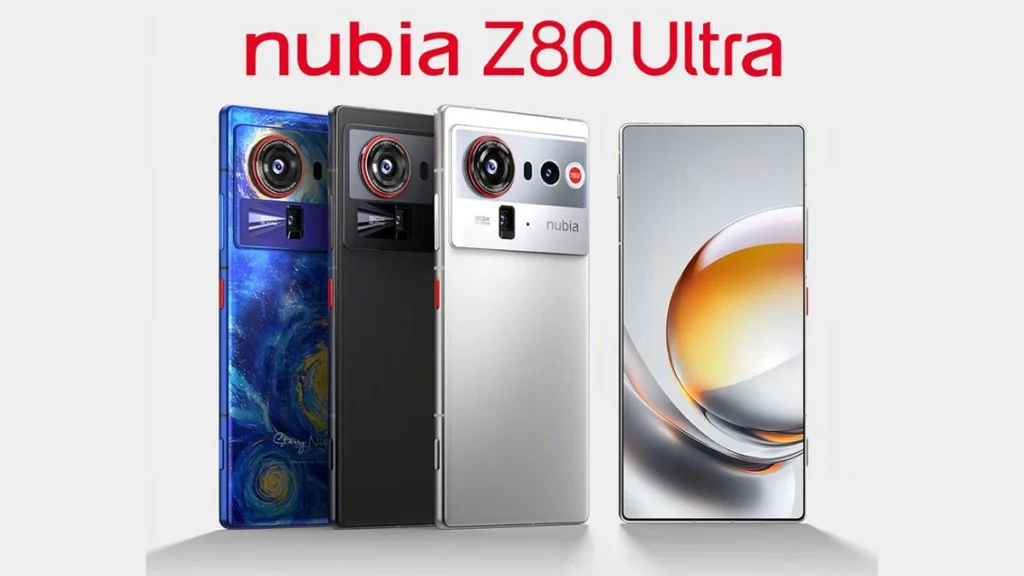
The Nubia Z80 Ultra is an unapologetic flagship: it piles in power, a near-bezel-less 144Hz AMOLED, a camera kit built around a 35mm main lens, and a headline-grabbing 7,200 mAh battery. Nubia didn’t aim for subtlety — it doubled down on stamina, photography and a distinctive design language. That clarity of purpose makes the Z80 Ultra exciting, but it also forces buyers to accept a few compromises.
Exterior design that signals intent
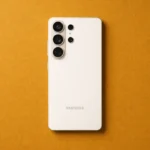
The Z80 Ultra looks and feels like an Ultra series phone: strong angles, a sizeable camera island and premium frosted glass that resists fingerprints. The unibody aluminum frame curves slightly at the edges to temper the 227g heft, yet the phone still reads as substantial in the hand — a deliberate choice, not an accident.
Nubia keeps tactile controls that matter: a red power button, a mute slider and a dedicated camera key — features increasingly rare on Android flagships. The Van Gogh Blue finish with its “Starry Night” swirl is the most attention-grabbing option, but the phone is available in Black and White as well. The selfie camera sits under the screen for a seamless front and a display ratio north of 93%, which sells the full-screen pitch.
Display: raw speed and ultra-bright clarity
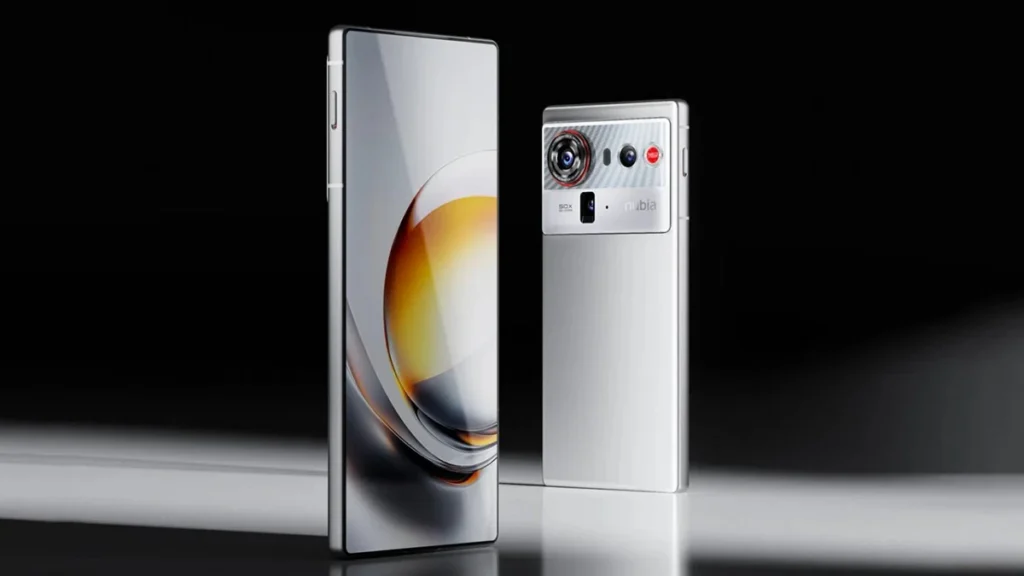
The 6.85-inch AMOLED delivers 1.5K resolution (1216 × 2688), a 144Hz refresh rate and up to 2000 nits peak brightness on paper. In daily use the panel feels incredibly smooth — scrolling, gestures and high-frame-rate gaming are all fluid. Measured brightness typically sits around 1400 nits in regular modes, a practical cap Nubia likely uses to control thermals and battery drain, but outdoor visibility remains excellent.
Color and contrast are punchy without going overboard; deep blacks and wide viewing angles make this a strong all-round screen. The upgraded in-display ultrasonic fingerprint sensor is fast and consistent, a small but meaningful refinement over previous models.
Camera system: serious hardware, confident processing
Nubia positions the Z80 Ultra as a photographer’s tool, and the hardware supports that claim: a 50MP main sensor at a 35mm focal length, a 64MP periscope telephoto with 2.7x optical (85mm), and a 50MP ultra-wide. The AI-powered Nebula Vision Engine and NEOVISION processing bring speed and balanced colors to everyday shots.
Images from the main sensor show high detail and wide dynamic range; the 35mm framing gives portraits and street shots a natural feel. Low-light handling is competent — highlights and shadows are managed well, and night scenes keep neon and signage under control. Video options are generous too, with 8K@30fps and 4K@120fps plus OIS+EIS for steady footage. The under-display 16MP selfie camera preserves the clean front, though it softens slightly in dim light — a trade-off buyers need to accept for the full-screen look.
Performance: top-tier silicon, sensible thermal choices
At the heart is the Snapdragon 8 Elite Gen 5, paired with up to 16GB RAM and up to 1TB storage. Real-world responsiveness is flagship-grade: fast app launches, smooth multitasking and strong single- and multi-core scores. UFS 4.0 and LPDDR5X speeds further tighten everyday performance.
Nubia didn’t turn this into a gaming-only behemoth; there’s no vapor chamber or active fan. That means sustained heavy-load throttling can occur, though casual and sustained gaming — even at high settings — remains smooth for most users. If you want raw, thermally aggressive gaming hardware, this isn’t the specialist pick; if you want a balanced flagship with long runtimes, it fits the bill.
Battery and charging: the core argument for this phone
This is where the Z80 Ultra sets itself apart. The 7,200 mAh silicon-carbon battery delivers exceptional endurance: two days in typical use and markedly long continuous sessions (real tests cite 23 hours of web browsing and 13 hours of video playback). That longevity changes daily habits — less frantic charging, more peace of mind.
Charging is strong for a big cell: 90W wired and 80W wireless support significantly cut refill times. Nubia claims a full 0–100% charge in about an hour with the official charger — impressive for such capacity. If battery life is your top priority, the Z80 Ultra’s core trade-off — size and weight — is worth considering.
Specifications snapshot
- Size & weight: 164.5 × 77.2 × 8.6 mm; 227g
- Display: 6.85-inch AMOLED, 144Hz, 1.5K (1216 × 2688), up to 2000 nits
- Chipset: Snapdragon 8 Elite Gen 5 (3nm)
- Software: Android 16, Nebula iOS 2
- Rear cameras: 50MP (35mm) main + 64MP (70mm) periscope + 50MP ultra-wide (18mm)
- Front camera: 16MP under-display
- Battery: 7,200mAh
- Charging: 90W wired, 80W wireless
Should you buy the Nubia Z80 Ultra?
Buy it if you want a flagship that prioritizes battery life, a clean full-screen display and a camera system that favors natural framing and real-world detail. The Z80 Ultra is geared toward creators and heavy users who value endurance and a distinctive aesthetic.
Pause if you prize ultraportability, the smallest possible weight, or an under-display selfie camera that performs flawlessly in low light. This is where it divides opinion: the under-screen camera and the phone’s thickness won’t please everyone, and the thermal choices limit peak sustained gaming compared with specialist gaming phones.
Conclusion: a clear-minded flagship with purposeful compromises
The Nubia Z80 Ultra doesn’t try to be everything. It stakes a credible claim as a battery-first, camera-capable flagship with a fast, near-bezel-less display and confident design choices. Where it asks you to compromise — size, slight under-screen selfie softness and thermal limits under extreme load — those are honest trade-offs for what it delivers. If those trade-offs match your priorities, the Z80 Ultra is a compelling, distinct choice in 2026.

Tanu is a technology content writer at gemch.in who tracks smartphone launches, features, and pricing trends. She writes user-focused articles that explain what matters most in everyday smartphone use.