Apple is set to launch the iPhone 17e at $599, making it one of the most affordable ways to get Apple’s latest A19 chip. On the surface, it delivers the same core performance as the more expensive iPhone 17, which makes it instantly appealing for value-focused buyers.
But the real difference lies beyond performance. The iPhone 17 offers major upgrades in display smoothness, camera versatility, and charging speed, creating a more complete flagship experience. This comparison explains where the iPhone 17e saves money, and where the iPhone 17 clearly pulls ahead.
Design and build
The 17e follows the compact aluminum-and-glass formula of the 16e: light, thin, and deliberately simple. At 7.8mm and 167g it’s noticeably easier to pocket and use one-handed than the slightly larger 17.
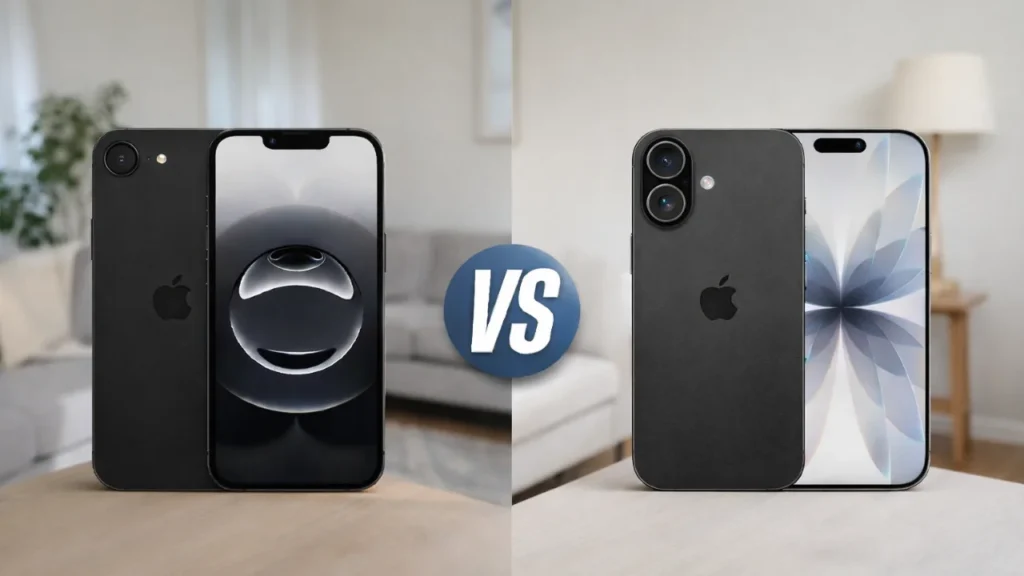
You give up Apple’s new Camera Control button and Dynamic Island, and the 17e sticks with a notch. Colour choices are limited to black and white, while the 17 offers more finishes and a visibly more premium layout — a compact Dynamic Island, vertical dual-camera array and the Action + Camera Control buttons.
Both carry IP68 ratings, so durability won’t be an issue. The trade-off here is clear: the 17e prioritises convenience and cost; the 17 prioritises a modern, premium feel.

Screen and daily experience
This is where the two phones feel very different day to day. The 17e’s 6.1-inch Super Retina XDR OLED runs at 60Hz and peaks at 1,200 nits. It looks good, but it doesn’t deliver the same fluidity or outdoor brightness as the 17’s 6.3-inch Liquid Retina XDR with 120Hz ProMotion and a 3,000-nit peak.
Scrolling, gaming and motion-heavy apps are visibly smoother on the 17. If you value the smoothest interaction and an ultra-bright display for outdoors, the 17 is the clear winner; if you prioritise battery and a solid display without the frills, the 17e will do the job.
Performance and connectivity
Both phones use the A19 (3nm), so raw CPU and GPU performance are essentially identical — you won’t lose processing power on the 17e. The key difference is modems: the 17e ships with Apple’s C1X modem and an N1 connectivity chip (Wi-Fi/Bluetooth/Thread), while the 17 uses Qualcomm’s Snapdragon X80 5G.
Apple’s approach appears intentional: a capable, power-efficient modem in the cheaper model, and a tried-and-tested Qualcomm solution in the standard phone. For everyday apps, gaming and editing, both will feel fast; for modem behaviour and power efficiency, expect slightly different real-world profiles depending on network conditions.

Cameras and creative use
Camera capability is a decisive split. The 17e sticks to a single 48MP OIS rear sensor and a 12MP front camera — good for most users and perfectly adequate for casual photos and social content. The 17, however, gives you dual 48MP rear sensors (main + ultra-wide), a 2x optical option, an 18MP Center Stage selfie camera and a hardware Camera Control button.
This isn’t just about resolution — it’s about versatility. If you shoot varied scenes, want ultra-wide shots, or use your phone for serious content work, the 17 is worth the premium. For everyday snaps, the 17e is sensible and competent.
Battery life and charging
Surprisingly, the 17e packs the larger battery at 4,005mAh versus the 17’s 3,692mAh. Combined with the A19 and Apple’s modem choices, the 17e is likely to outlast the 17 in mixed use.
Charging differs too: 17e supports 20W wired and MagSafe Gen 1, while the 17 doubles wired speed to 40W and supports MagSafe 2.0. In short, the 17e leans on endurance; the 17 balances endurance with faster top-up times.

iPhone 17e vs iPhone 17: Specifications Comparison
| Specification | iPhone 17e | iPhone 17 |
|---|---|---|
| Launch Price | $599 | $799 |
| Display | 6.1-inch Super Retina XDR OLED, 60Hz, 1,200 nits | 6.3-inch Liquid Retina XDR, 120Hz ProMotion, 3,000 nits |
| Processor | Apple A19 (3nm) | Apple A19 (3nm) |
| RAM | 8GB LPDDR5 | 8GB LPDDR5 |
| Storage Options | 128GB / 256GB / 512GB | 256GB / 512GB |
| Rear Camera | Single 48MP (OIS) | Dual 48MP (Main + Ultra-wide) |
| Front Camera | 12MP | 18MP Center Stage |
| Battery Capacity | 4,005mAh | 3,692mAh |
| Wired Charging | 20W | 40W |
| Wireless Charging | MagSafe Gen 1 | MagSafe 2.0 |
| Design Features | Notch, no Camera Control button | Dynamic Island, Action button, Camera Control button |
| Colors | Black, White | Black, White, Light Green, Light Purple, Light Blue |
Value and who should buy it
At $599 the 17e is the sharper, more pragmatic pick for buyers in emerging markets and anyone who values battery life, a compact build and the core iOS experience without premium extras.
The standard 17 is the phone for people who want the best display, a far more flexible camera system, and the little hardware niceties that make a difference to creators and power users. This is where it divides opinion: save and get excellent everyday performance, or spend more for a clear upgrade in display and photography.

Verdict
Both phones are sensible, well-made additions to Apple’s lineup. The iPhone 17e tightens the value proposition of the affordable line — it fixes key weaknesses from the previous generation and gives most buyers exactly what they need. The iPhone 17, though pricier, delivers a noticeably more capable display and camera setup for those who will use them.
Decide by use, not just by headline specs: if long battery life and a lighter pocket-friendly phone matter most, pick the 17e; if smoother display performance and camera versatility matter, the iPhone 17 is the one to choose.

Tanu is a technology content writer at gemch.in who tracks smartphone launches, features, and pricing trends. She writes user-focused articles that explain what matters most in everyday smartphone use.