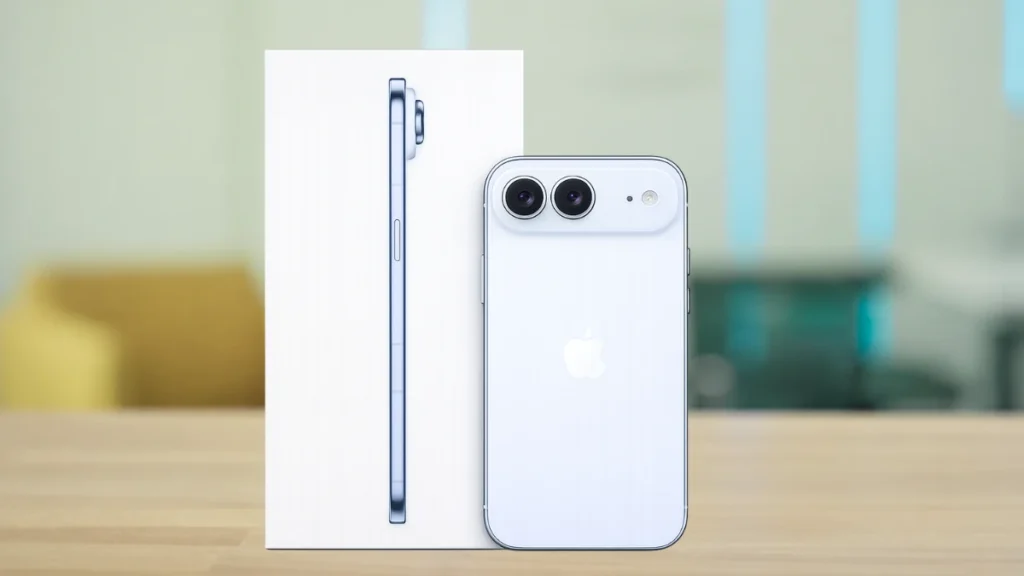
Apple’s ultra-thin iPhone experiment didn’t make the impact many expected — but the story is far from over. With the iPhone Air 2, Apple appears ready to fix the biggest flaws of the first generation while doubling down on its sleek design philosophy.
Early reports suggest smarter performance, better battery life, a more versatile camera setup, and display technology built specifically for ultra-slim devices. If these upgrades land as planned — and the price shifts in buyers’ favor — the iPhone Air 2 could finally turn a stylish concept into a serious flagship contender.
A 2nm chip designed to fix the biggest complaint
The headline upgrade is the move to a next-generation 2-nanometer processor, reportedly called the A20 Pro. This shift isn’t just about raw speed. The main goal is efficiency. Battery life was the first iPhone Air’s biggest weakness, and Apple seems determined to address it head-on.
The 2nm manufacturing process is expected to deliver noticeably better performance while using significantly less power, helping the ultra-thin phone last longer without sacrificing smoothness. If this improvement delivers in real-world use, it could completely change how the Air series is perceived.

A second camera finally adds real flexibility
The original iPhone Air launched with a single 48MP camera — sharp, capable, but limited. Now, multiple sources suggest Apple is adding a second lens to the iPhone Air 2. The most likely choice is an ultra-wide camera, giving users far more freedom for landscapes, group shots, and creative angles.
This is a practical upgrade rather than a flashy one, but it directly fixes one of the biggest functional gaps of the first model. For many buyers, this change alone could make the Air feel like a proper flagship instead of a stylish compromise.
A possible price cut that could change its fortunes
Pricing may be where Apple makes its boldest move. The first iPhone Air launched at ₹1,19,900 and reportedly struggled to attract strong demand. Now, some reports suggest Apple could drop the starting price to ₹1,09,999 for the second generation.
This wouldn’t be typical Apple behavior, which is why this rumor should be taken carefully. Still, if it happens, it would make the Air 2 far more competitive and easier to justify — especially considering the performance and display upgrades on the way. This is the trade-off buyers will be watching closely: premium design at a slightly more realistic price.

A thinner, brighter display using new CoE technology
One of the most interesting upgrades lies in the screen itself. Apple is reportedly testing CoE (Color Filter on Encapsulation) OLED technology for the iPhone Air 2. Unlike current displays that rely on a polarizing layer, CoE places the color filter directly on the OLED’s outer layer. The benefits are clear:
• A thinner panel
• Higher brightness
• Improved energy efficiency
For an ultra-thin phone like the Air, this technology fits perfectly with Apple’s design goals while also helping battery life. It’s a technical change most users won’t notice immediately — but it could quietly make the phone better in everyday use.
A smooth 120Hz LTPO screen with Dynamic Island
Beyond the new OLED structure, the iPhone Air 2 is expected to feature a 6.55-inch LTPO display with a 120Hz refresh rate. That’s a big step up from the previous generation and brings smoother scrolling, better animations, and more efficient power management.
Dynamic Island is also expected to return, keeping the same interactive design language seen on recent iPhones. The overall screen size will remain roughly the same, but with noticeably better performance and efficiency.

Even thinner — without changing the familiar look
Apple doesn’t appear to be reinventing the iPhone Air’s design. The shape, button layout, Action button, and camera controls are all expected to remain familiar. The real focus is making the device even slimmer.
The current iPhone Air already measures just 5.6mm thick. With the new CoE display technology, Apple could shave that down even further — or at least maintain the ultra-thin profile while improving durability and battery efficiency. This minimalist evolution won’t please everyone, but it stays true to the Air’s core identity.
Possible launch window: fall 2026 or spring 2027
Two release scenarios are currently being discussed. One possibility is a fall 2026 launch alongside the iPhone 18 Pro, Pro Max, and a foldable iPhone — creating a major premium-focused event.
The other is a spring 2027 release paired with the standard iPhone 18, following a split launch strategy similar to past iPhone SE launches. For now, Apple’s exact timing remains unclear.

Final thoughts
The iPhone Air 2 looks less like a simple refresh and more like a course correction. With a highly efficient 2nm chip, a long-overdue second camera, advanced display technology, smoother 120Hz visuals, and the possibility of a lower price, Apple seems to be directly addressing the flaws that held back the first generation.
Still, this ultra-thin approach won’t appeal to everyone. The focus on slimness continues to demand compromises, and buyers will have to decide if the improved battery life and features are enough this time around.
If these upgrades arrive as expected — especially alongside a price drop — the iPhone Air 2 could finally turn Apple’s sleek experiment into a genuinely compelling flagship alternative.

Tanu is a technology content writer at gemch.in who tracks smartphone launches, features, and pricing trends. She writes user-focused articles that explain what matters most in everyday smartphone use.