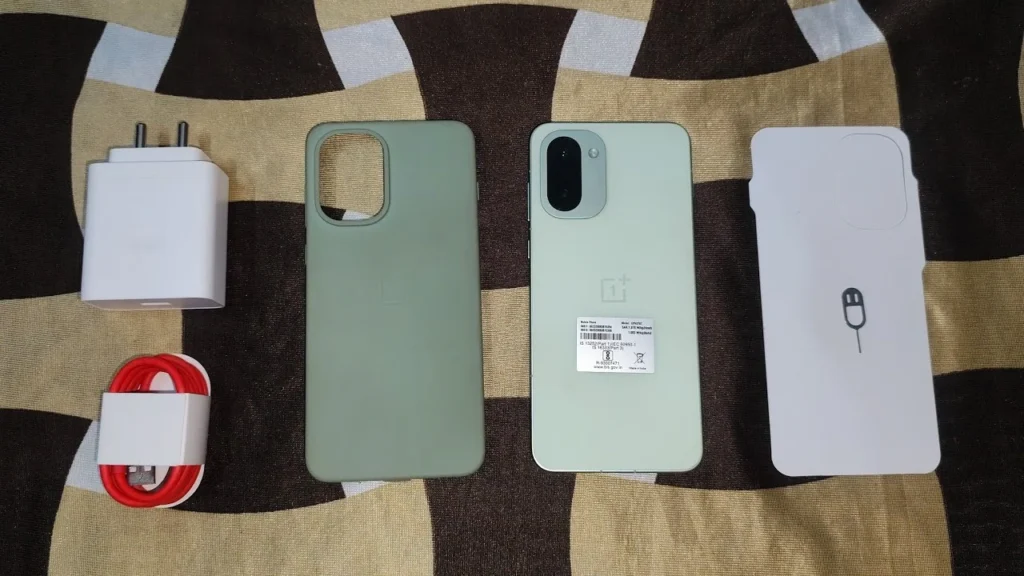
The OnePlus 15R arrives with a familiar promise that OnePlus has leaned on for years: flagship-grade performance, trimmed just enough to hit a lower price. At Rs 44,999, it undercuts the standard OnePlus 15 by a meaningful margin, and its priorities are clear from the first glance. A massive 7,400mAh battery and a headline-grabbing 165Hz display take centre stage. But those gains come with visible trade-offs, especially around cameras and charging convenience. This review breaks down where the OnePlus 15R shines, where it compromises, and exactly who should be buying it.
Design that feels premium and built to last
The OnePlus 15R sticks closely to the design language of the OnePlus 15, and that works in its favour. The flat edges give it a modern look, while subtle curves ensure it never feels sharp or uncomfortable in hand. Charcoal Black and Mint Green are the two available colours, with the Mint Green variant’s frosted glass back doing an excellent job of resisting fingerprints and smudges.
Durability is where the 15R quietly stands out. OnePlus has not diluted protection to hit the price. With IP66, IP68, IP69, and IP69K ratings, the phone is protected against dust, full water submersion, and even high-pressure water jets. This is the kind of ruggedness that many ultra-premium flagships still lack, and it gives the 15R a real edge for users who want peace of mind, not just polish.

A 165Hz display that won’t impress everyone equally
The OnePlus 15R features a 6.83-inch AMOLED display with a resolution of 2800 x 1272 and a sharp 450 PPI pixel density. On paper, it looks every bit like a flagship panel. The 165Hz refresh rate is the headline feature, but this is where opinions may split.
For everyday use, the jump from 120Hz to 165Hz is subtle to the point of being nearly invisible. Scrolling, app switching, and general navigation feel smooth, but not dramatically different from other high-end phones. Competitive gamers, however, will appreciate the extra headroom, especially in fast-paced titles where every frame matters.
Brightness peaks at 1800 nits, making outdoor visibility a non-issue, while the 1-nit low-brightness mode is genuinely useful for late-night use. OnePlus also touts a 3200Hz touch sampling rate, though in real-world usage, it feels more like a technical flex than a transformative upgrade.
Performance that’s powerful, but clearly positioned
At its core, the OnePlus 15R runs on the Snapdragon 8 Gen 5 processor, paired with 12GB LPDDR5X RAM and 256GB UFS 4.0 storage. This is a high-end setup, just not the absolute peak of Qualcomm’s lineup.
Benchmark numbers reflect that positioning. Geekbench 6 scores sit at 2,862 for single-core and 9,554 for multi-core performance, trailing the Snapdragon 8 Elite Gen 5 by a noticeable margin. AnTuTu scores hover around 1.85 million. These figures make it clear where the 15R stands: fast, reliable, but not class-leading.
In daily use, that distinction barely matters. Web browsing is fluid, multitasking with 10 to 15 apps is effortless, and popular games like PUBG, Mobile Legends, and Free Fire run smoothly at high settings. Photo editing apps and 4K video streaming pose no problems either.
Where the limits appear is at the extreme end. Ultra graphics in demanding games, long 4K video recording sessions, heavy AI workloads, and benchmark-focused performance chasing are not the OnePlus 15R’s strengths. This is a phone tuned for consistency, not excess.

Battery life is the OnePlus 15R’s defining advantage
If there is one reason to choose the OnePlus 15R over its rivals, it is the battery. The 7,400mAh cell, enabled by Silicon Nanostack technology, is enormous by today’s standards and fits into the phone without making it feel bulky.
In real-world use, 2 to 3 days on a single charge is entirely realistic. The technology allows for higher energy density, better long-term durability, and no dramatic increase in device thickness. OnePlus also claims the battery will retain 80 percent of its capacity after four years, which adds long-term confidence.
Charging speeds are fast, with 55W wired charging supported and higher speeds possible with a separate charger. The disappointment comes with what’s missing. There is no wireless charging, and at the Rs 45,000 price point, this omission will frustrate users who value everyday convenience over raw endurance.
Cameras that clearly reflect cost-cutting
The camera system is where the OnePlus 15R makes its biggest sacrifices. The setup is functional but uninspiring. The 8MP ultra-wide camera delivers average results and struggles in low light, while the absence of a telephoto lens is hard to ignore in this segment.
This is not a camera-focused phone, and OnePlus does little to hide that. Casual photos are fine, but anyone who enjoys zoom photography or expects strong low-light versatility will feel limited. This is the clearest dividing line in the 15R’s appeal.

OxygenOS 16 remains a strong selling point
The OnePlus 15R runs OxygenOS 16 based on Android 16, and it continues to be one of the cleanest Android experiences available. The interface is close to stock Android, light on bloatware, smooth in daily use, and highly customizable.
Features like Shelf, Zen Mode, Gaming Mode, and Private Safe add real utility without overwhelming the user. With four years of Android updates and six years of security patches, software support remains competitive and reassuring.
Final verdict: who should buy the OnePlus 15R?
The OnePlus 15R is a phone with clear priorities. It is built for users who value exceptional battery life, a durable design, and consistently smooth performance. If those factors matter more to you than camera versatility or wireless charging, the 15R makes a strong case for itself at Rs 45,000.
However, this choice will not please everyone. Photography enthusiasts and users who expect every premium convenience will find the compromises hard to ignore. For them, spending more on a more rounded flagship may be the wiser move. The OnePlus 15R knows exactly what it is, and for the right buyer, that clarity is its biggest strength.

Ramesh is a technology writer at gemch.in, covering smartphone launches, leaks, and comparisons. His articles focus on real-world features, performance, and value-for-money insights to help readers make informed buying decisions.