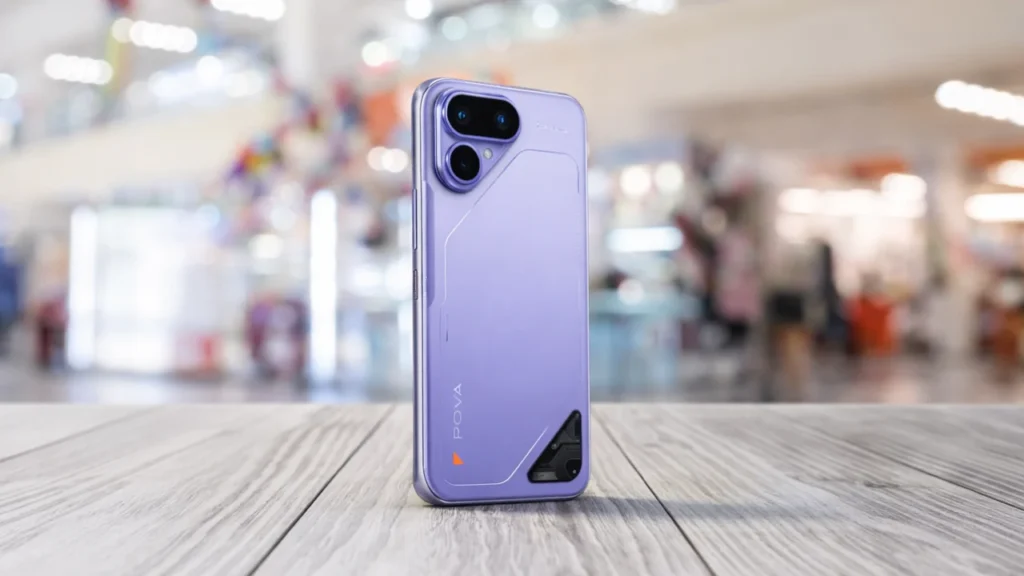
TECNO has introduced the POVA Curve 2 5G in India, targeting users who want a premium-looking design, a very large battery, and 5G performance in one package. The phone’s headline features are a 3D curved AMOLED display, an 8,000mAh battery, and a distinctive, futuristic camera design. Below is a clear, concise rundown of what the phone offers and first impressions based on hands-on time.
Price and availability
The POVA Curve 2 5G is offered in two storage configurations: 8GB RAM + 128GB and 8GB RAM + 256GB. The starting price is ₹27,999 for the 8GB + 128GB model and ₹29,999 for the 8GB + 256GB model.
It will be available in three colours — Storm Titanium, Melting Silver, and Mystic Purple — with the first sale scheduled for 20 February at 12:00 PM on Flipkart. The company is also offering an instant discount of ₹3,000 on purchase.
Display
The phone sports a 6.78-inch full-HD+ (1,080 x 2,364 pixels) curved AMOLED display with a 144Hz refresh rate and a claimed 93.18% screen-to-body ratio. Peak brightness is listed at 4,500 nits, and the panel ships with Corning Gorilla Glass 7i protection.
The curved 3D panel is the main visual highlight and is intended to give the POVA Curve 2 a premium look compared with typical mid-range devices.
Processor and memory
Under the hood is the MediaTek Dimensity 7100 chipset paired with 8GB of RAM and either 128GB or 256GB of storage. The phone supports a virtual RAM feature that can extend usable memory up to 16GB, and graphics are handled by the Arm G610 MC2 GPU. These choices aim to balance everyday performance and gaming capability in the mid-range segment.

Camera setup
The POVA Curve 2 5G uses a dual rear camera arrangement: a 50-megapixel primary sensor backed by a 2-megapixel secondary sensor. For selfies, there’s a 13-megapixel front camera.
The phone also includes what the company calls an “all-scenario AI noise reduction” feature, which it says improves voice clarity during calls, video meetings, and gaming.
Battery and charging
Battery capacity is a standout: an 8,000mAh cell that supports 45W fast charging. The box includes a 45W charger. According to the company’s provided figures, a single full charge delivers 16.4 hours of video playback, 35.7 hours of music playback, 48.1 hours of calling time, and 1,133.1 hours of standby time.
Software, connectivity and durability
The phone runs HiOS 16 based on Android 16 and includes ELLA AI 2.0 plus multilingual support for languages such as Hindi, Bengali, Tamil, Gujarati, and Marathi.
It also includes a G1 signal enhancement chip and an SE1 WiFi enhancement chip, which the company claims can improve mobile signal strength by 33–100% and WiFi strength by up to 60%.
Additional features include an in-display fingerprint sensor, IP64 dust and splash resistance, Dolby Atmos support, and USB Type-C audio.
What’s Good and What’s Average
The biggest strengths of the TECNO POVA Curve 2 5G are its design, display, and battery capacity. The company has clearly focused on these three areas.
The phone stands out in terms of design and looks different from typical devices in this segment. The display feels sharp and produces good visuals. The battery also felt strong in daily use and can easily last around one and a half days.
For users in areas with weak network coverage, this device may be helpful as it supports 20 5G bands.
However, the camera performance is not very impressive. The main rear camera is decent, but overall camera features feel average.

Who should consider it
The POVA Curve 2 5G is a strong option for users who prioritise a stylish curved AMOLED screen, long battery life, and robust 5G support in a mid-range package. Priced and specced as it is, the device positions itself as a credible contender in the 2026 mid-range market and is likely to compete directly with brands such as Realme, Redmi and Infinix.

Ramesh is a technology writer at gemch.in, covering smartphone launches, leaks, and comparisons. His articles focus on real-world features, performance, and value-for-money insights to help readers make informed buying decisions.