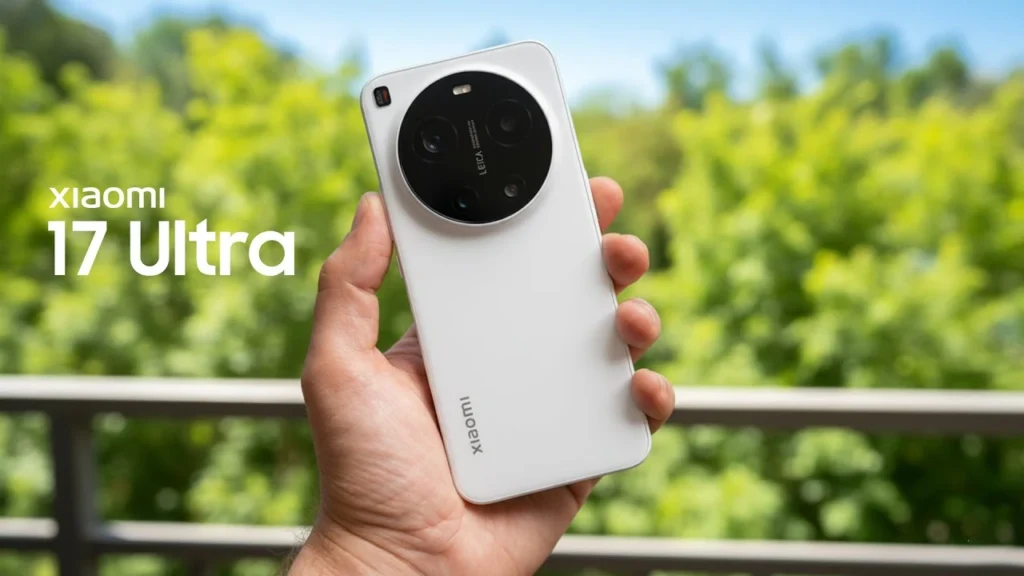
In the ultra-premium smartphone segment, Xiaomi isn’t playing safe anymore. The Xiaomi 17 Ultra is a flagship built with a single-minded focus: top-tier performance, a massive high-end display, and a Leica-backed camera system that clearly targets serious creators, not casual shooters. Add a huge battery to the mix, and the message is obvious—this phone is designed for people who actually use their phone hard every day.
This Xiaomi 17 Ultra review breaks down what matters in real life: the design choices, the display experience, raw performance, camera strengths, software polish, battery endurance, and the trade-offs buyers need to accept before spending flagship money.
Design and build quality
The Xiaomi 17 Ultra looks and feels like an “Ultra” the moment you pick it up. It’s big, heavy, and unapologetically premium. Unlike slim flagships trying to look minimal, Xiaomi leans into a more serious, solid identity—less fashion accessory, more professional tool.
The sturdy metal frame and neatly finished rear panel give the phone an expensive, confident feel. Despite the large footprint, the curves along the back and edges are shaped to reduce discomfort during long use. With an 8.5mm thickness and around 230g weight, this isn’t a one-hand-friendly phone—and Xiaomi isn’t pretending otherwise. This is the kind of flagship that values presence and capability over pocket comfort.
The camera module dominates the rear, and that’s exactly the point. Xiaomi doesn’t hide it—it puts it on display. The lens layout looks clean and deliberate, giving the phone a distinct, photography-focused character.
Button and port placement stays familiar: speaker, USB Type-C, mic, and SIM slot at the bottom; power and volume keys on the right. The separated, small, round key design looks premium and is easy to identify, but it may divide opinion—especially for users used to continuous button layouts.
Color options lean luxurious rather than flashy. The matte finish helps with grip and reduces fingerprints. The Starry Green variant stands out most, thanks to its dotted pattern resembling a night-sky texture, clearly aimed at users who want their flagship to look different.

Display experience
The Xiaomi 17 Ultra gets a 6.9-inch LTPO M10 OLED panel—one of the most premium screen choices in the Android space. It supports 12-bit color, and that extra depth shows up in photo viewing, HDR video, and smooth gradients where cheaper displays start looking flat.
Resolution sits at 2608 x 1200 pixels, delivering sharp visuals even with small text. LTPO refresh rate scaling from 1Hz to 120Hz keeps scrolling smooth while conserving battery on static screens.
With a peak brightness up to 3500 nits, the phone stays readable outdoors with ease—this matters more than many people admit, especially in Indian sunlight. Xiaomi also includes DC Dimming and a high PWM frequency to reduce flicker in low light.
HDR10+ and Dolby Vision support make streaming content look rich and punchy, with strong contrast and well-controlled highlights.
Performance that doesn’t blink
The Xiaomi 17 Ultra runs the Snapdragon 8 Elite Gen 5 (3nm), paired with Adreno 840 GPU. In real usage, this is a performance-first flagship, built for heavy multitasking, high-graphics gaming, video editing, RAW processing, and long sessions without slowing down.
With up to 16GB LPDDR5X RAM and UFS 4.1 storage, the phone feels fast in everything—app launches, switching between tasks, file handling. This is the kind of setup that won’t feel outdated anytime soon.

Leica camera system
This is where Xiaomi tries to separate itself from the crowd. The Xiaomi 17 Ultra isn’t just “good for a phone”—it’s clearly designed to be a serious mobile imaging device.
The main camera uses a 50MP Light Fusion 1050L 1-inch sensor (23mm, f/1.7). In daylight, it delivers high detail, accurate colors, and a strong dynamic range. In low light, the advantage is even clearer: cleaner images, reduced noise, and better control over highlights and shadows.
Xiaomi’s night processing leans toward a Leica-style approach—preserving the mood instead of aggressively brightening everything. That decision won’t please everyone, but for users who prefer realistic night shots, it’s the right kind of restraint.
The 200MP periscope telephoto is the headline upgrade, offering f/2.4 to f/3.0 with 75mm to 100mm focal length (3.2x to 4.3x optical zoom). It keeps high detail while offering flexible framing. It also supports close focusing from 30mm, which adds versatility for portraits, bokeh shots, and close-up compositions.
The 50MP ultra-wide (14mm, 115°) is strong for landscapes, buildings, and group shots. Distortion control is effective, and edge sharpness holds up well. Macro support at 5cm adds creative flexibility.
A 50MP selfie camera handles selfies with solid detail and natural tones, while also supporting 4K video at 30fps and 60fps for vlogging and calls.
On video, the Xiaomi 17 Ultra supports unlimited 8K@30fps plus 4K@30/60/120fps and up to 1920fps slow-motion at 1080p. ACES LOG is included for creators who care about color grading and post-production.
Xiaomi also offers a Photography Kit accessory that improves grip and doubles as a backup battery—practical for long shooting sessions.
Software and flagship extras
The phone comes with HyperOS 3 based on Android 16. Xiaomi’s focus here is stability and smoothness, and the UI feels cleaner and more refined than older generations, without losing customization depth.
A standout addition is Ultra-Wideband (UWB) support, letting the Xiaomi 17 Ultra interact with Xiaomi ecosystem devices—especially vehicles like the SU7 or YU7—for smart actions like unlocking, trunk access, and proximity-triggered functions.
Other premium essentials remain: ultrasonic in-display fingerprint, face unlock, stereo speakers, and full connectivity including next-gen Wi-Fi, fast Bluetooth, and 5G.

Battery life and charging
The Xiaomi 17 Ultra packs a 6,800mAh battery—massive for a flagship. For heavy users, this is one of its biggest selling points. Whether it’s long camera sessions, gaming, 5G use, or high-brightness outdoor use, the battery is built to handle it.
Efficiency also benefits from the Snapdragon 8 Elite Gen 5, LTPO refresh rate control, and HyperOS 3 optimizations. Even with demanding usage, battery drain stays controlled enough to feel dependable.
Charging supports 90W to 100W wired speeds, which makes the experience genuinely convenient for busy users. Wireless charging and reverse charging are also included for ecosystem convenience.
Should you buy the Xiaomi 17 Ultra?
If you want a flagship that feels truly top-of-the-line across performance, display, battery, and camera—this is the Xiaomi phone that makes the strongest case. It’s built for power users, creators, and photography lovers who want more than just “good enough” results.
But this choice comes with a clear trade-off. The Xiaomi 17 Ultra is large and heavy, and it’s not ideal for compact-phone buyers or people who mainly do basic daily tasks. If your phone use is limited to calls, light social media, casual browsing, and streaming, you simply don’t need this much hardware—and you’ll be better served by a near-premium model.

Conclusion
The Xiaomi 17 Ultra is a flagship for buyers who want everything pushed to the limit: a premium build, a top-end OLED panel, Snapdragon-level speed, Leica-tuned cameras with serious hardware, and a battery that’s built for heavy real-world usage. It’s not a phone for everyone—and that’s exactly why it stands out.

Tanu is a technology content writer at gemch.in who tracks smartphone launches, features, and pricing trends. She writes user-focused articles that explain what matters most in everyday smartphone use.