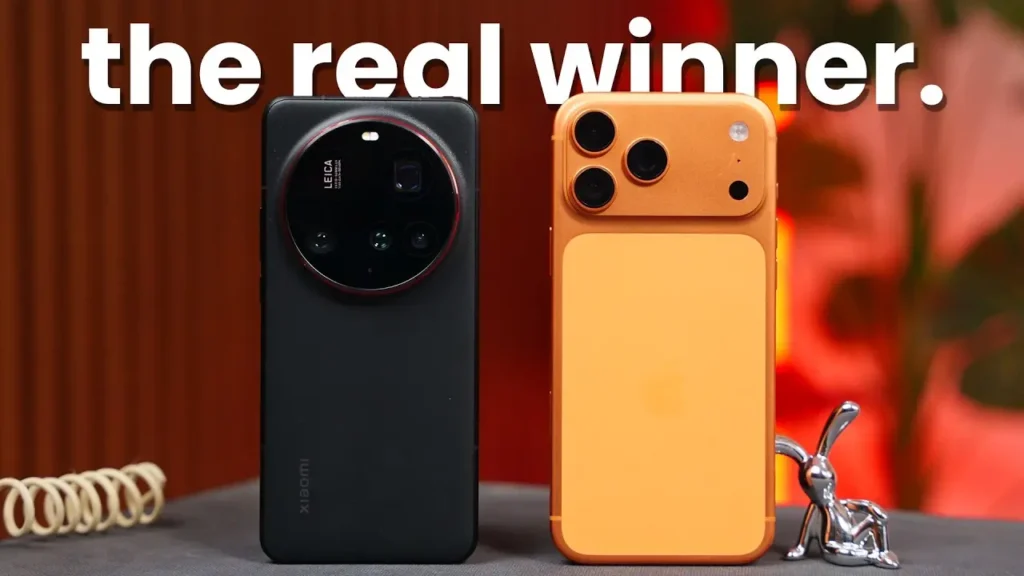
Choosing a premium phone isn’t just about the brand on the box. It’s about finding a device that actually fits how you work, create, and live every day. The Xiaomi 17 Ultra and iPhone 17 Pro Max both bring serious power, but they’re built with different kinds of users in mind. If you’re a photographer, creator, or heavy user, this guide will help you see which one makes more sense for you.
Design and feel
Pick up the Xiaomi 17 Ultra and it immediately feels tough. The body is solid, the build feels strong, and it gives confidence if you’re outdoors a lot or don’t treat your phone gently. It still looks premium, but there’s a “ready for work” vibe to it.
The iPhone 17 Pro Max goes in another direction. Clean lines, minimal design, and a very refined finish. It feels professional and stays fresh-looking even after long use. If you like something that feels like a tool, Xiaomi leans that way. If you want something sleek and polished, the iPhone fits better.

Display experience
Xiaomi’s AMOLED display is all about impact. Colors are bold, contrast is deep, and movies, games, and photos jump off the screen. It’s dramatic, and it’s made to impress. Go Xiaomi if you want that instant “wow.”
Apple’s Super Retina XDR display focuses more on accuracy than flash. Colors look natural and consistent, which matters when you’re editing photos, working on graphics, or checking details. It’s less showy, more precise. Go iPhone if you need color you can trust.
Performance and software
The Xiaomi 17 Ultra runs the Snapdragon 8 Elite with HyperOS, and it feels fast from the start. Heavy games, multitasking, and big creative apps don’t slow it down. Switching between tasks feels easy and fluid.
The iPhone 17 Pro Max uses Apple’s A19 Pro chip, built for steady performance over time. Long video edits, big files, and demanding apps stay smooth without random hiccups. If you rely on your phone for serious work, that consistency matters. Both are powerful — but they handle power differently.

Battery and charging
Xiaomi clearly targets heavy users. The large battery comfortably lasts a full day, even when you push it hard. Fast wired and wireless charging means you can top up quickly and get moving again. Perfect for travel and long days.
The iPhone charges slower, but Apple manages battery efficiency extremely well. With normal use, it gets through the day without stress. It prioritizes stability instead of charging speed. So: Xiaomi wins for speed. iPhone wins for predictability.
Camera and creativity
Xiaomi’s Leica-tuned camera system feels built for people who love shooting. The continuous optical zoom gives more freedom in framing, which is great for nature, travel, and outdoor shots. It encourages you to try different styles and angles.
The iPhone camera is all about reliability. Colors stay consistent across different lighting situations, and what you see is what you get. With ProRes and Apple Log, it becomes a strong tool for professional video work and editing. Both are excellent — just focused on different creative needs.

Selfies and video
The Xiaomi front camera delivers sharp, detailed selfies. If clarity matters to you, it does the job well.
The iPhone’s selfie camera shines when it comes to video. Footage looks stable and smooth, making it a better pick for vlogging, reels, and front-facing clips.
Price and final pick
In India, the Xiaomi 17 Ultra is expected around ₹89,990 to ₹1,11,999. The iPhone 17 Pro Max is likely closer to ₹1,49,900.
If you want more features, camera flexibility, and fast charging without paying extra, Xiaomi feels like the smarter value.
If you want long-term stability, deep ecosystem integration, and dependable pro performance, the iPhone is the safer choice.
In the end, pick the phone that fits how you actually use it — not just the one with the bigger name.

Ramesh is a technology writer at gemch.in, covering smartphone launches, leaks, and comparisons. His articles focus on real-world features, performance, and value-for-money insights to help readers make informed buying decisions.