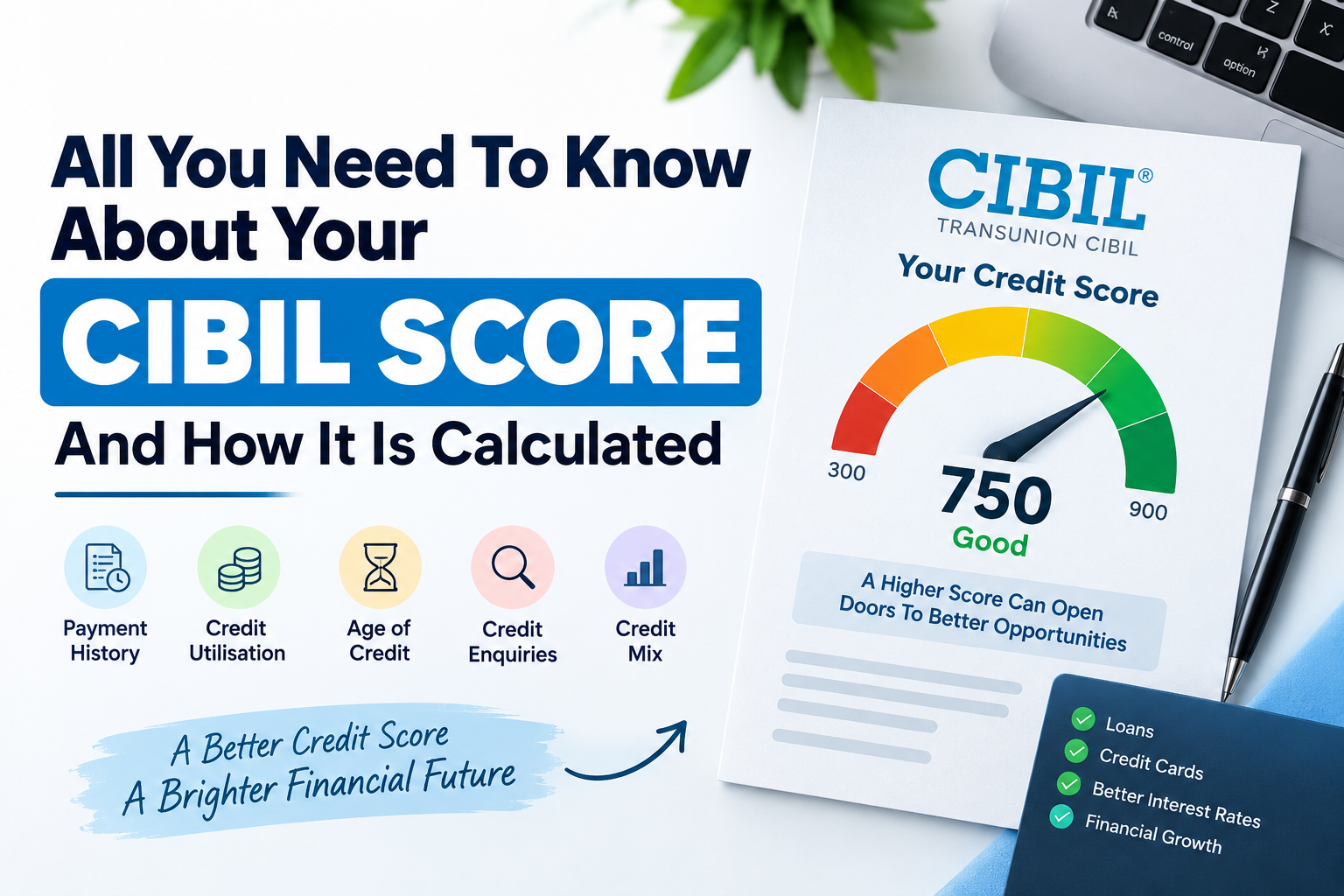
Your CIBIL Score is one of the most important numbers in your financial life, especially when you plan to apply for a loan or credit card. A good score can improve your chances of getting credit, while a low score may make borrowing more difficult or expensive.
But what exactly is a CIBIL Score? How is it calculated? What factors affect it? And what can you do to maintain or improve your score?
This guide explains everything you need to know about your CIBIL Score in simple terms.
What Is a CIBIL Score?
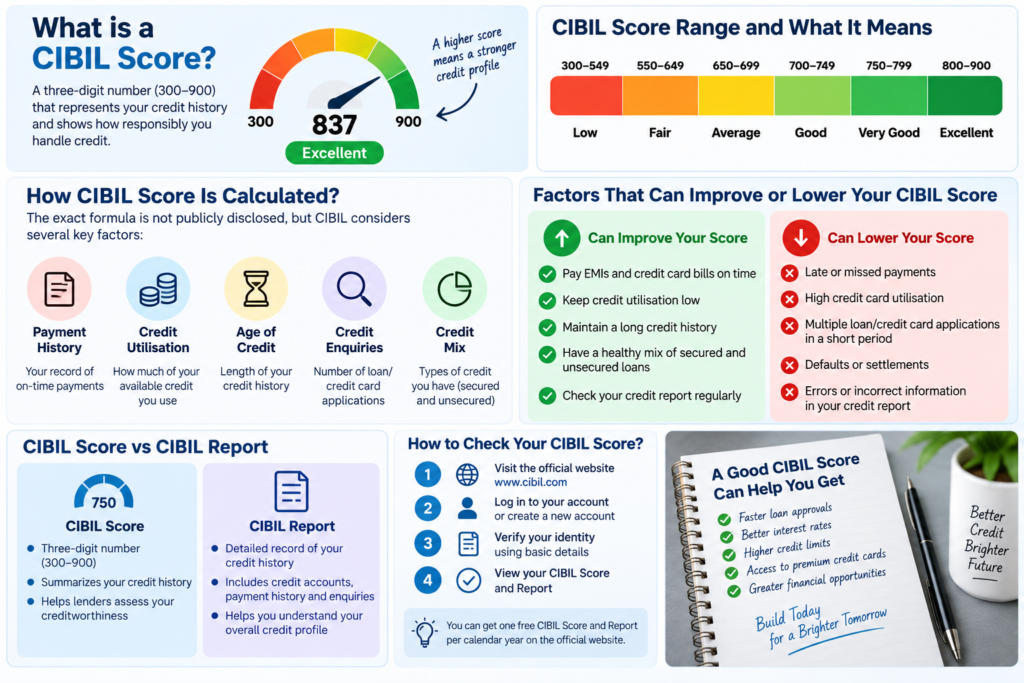
A CIBIL Score is a three-digit numerical summary of your credit history. It is based on information in your CIBIL Credit Information Report (CIR), including details about your credit accounts and credit enquiries.
The score ranges from 300 to 900. Generally, a higher score indicates a stronger credit history and can improve your chances of getting a loan or credit card approved. However, your CIBIL Score does not guarantee approval because lenders consider several other factors when evaluating an application.
Your CIBIL Score is calculated from information reported to TransUnion CIBIL by banks and financial institutions. It reflects your past credit behaviour, including how you have handled loans and credit cards.
Why Is Your CIBIL Score Important?
When you apply for a loan or credit card, lenders typically review your credit history as part of their assessment.
Your CIBIL Score gives lenders a quick indication of your past credit behaviour. A higher score can make you appear less risky from a credit-history perspective, while a lower score may result in closer scrutiny or rejection.
However, CIBIL does not approve or reject loans. The final lending decision is made by the individual bank or financial institution based on its own eligibility criteria.
Your income, employment, existing debts, loan amount, repayment capacity and the lender’s internal policies can also influence the final decision.
What Is the CIBIL Score Range?
Your CIBIL Score can range from 300 to 900.
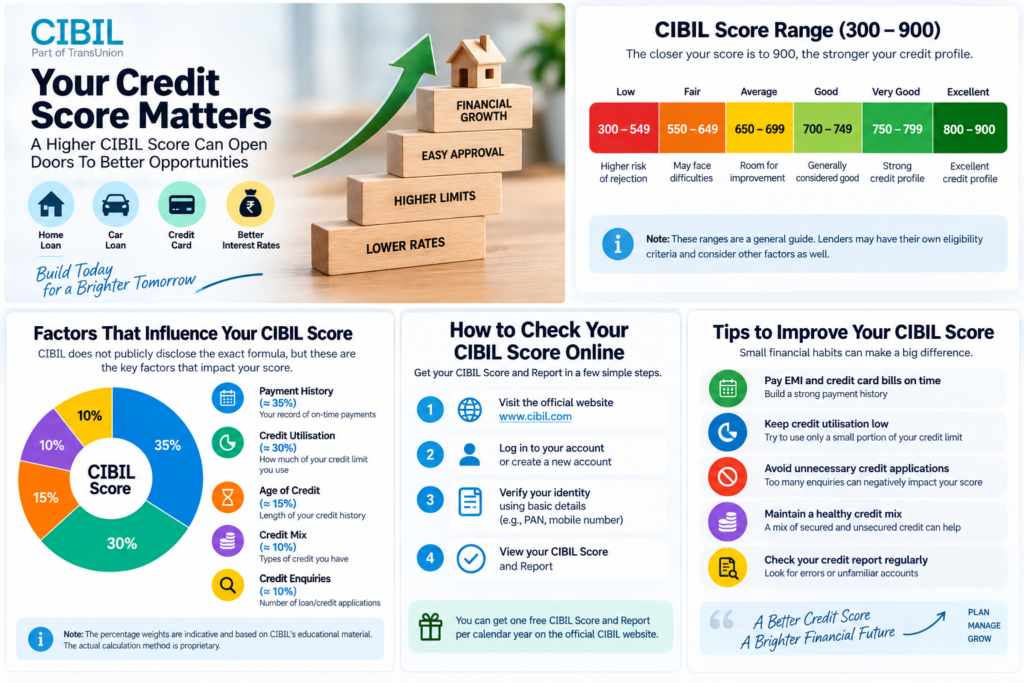
As a general rule, the closer your score is to 900, the stronger your credit profile is considered to be. CIBIL states that a score above 700 is generally considered good, although lenders may have different eligibility criteria.
| CIBIL Score | General Interpretation |
|---|---|
| 300–549 | Low |
| 550–649 | Fair |
| 650–699 | Average |
| 700–749 | Good |
| 750–799 | Very Good |
| 800–900 | Excellent |
Note: These bands are useful as a general guide, but there is no universal score at which every lender will approve an application. Each lender can have its own credit policies.
How Is a CIBIL Score Calculated?
The exact mathematical formula used to calculate an individual’s CIBIL Score is proprietary and is not publicly disclosed.
However, CIBIL identifies several major factors that influence the score. These include payment history, credit utilisation, age of credit and credit enquiries. CIBIL also highlights credit mix as an important consideration in its educational material.
Let’s understand each factor.
1. Payment History
Your payment history is one of the most important aspects of your credit profile.
It reflects whether you have been paying your credit obligations on time and in full. Late payments, missed payments and defaults can negatively affect your CIBIL Score.
For example, if you have a credit card bill or loan EMI due on a particular date and repeatedly make payments late, this behaviour can hurt your credit profile.
Best practice: Always pay your credit card bills and loan EMIs on time.
2. Credit Utilisation
Credit utilisation refers to how much of your available revolving credit you are using.
For example, suppose your credit card limit is ₹1,00,000 and your outstanding balance is ₹30,000. Your utilisation would be 30%.
A consistently high utilisation can indicate that you are relying heavily on available credit and may negatively affect your score. CIBIL advises consumers to keep their credit balances under control.
Keeping your credit utilisation low and managing your balances responsibly can help maintain a healthier credit profile.
3. Age of Credit
The length of your credit history can also influence your CIBIL Score.
A longer history gives lenders more information about how you have managed credit over time. CIBIL refers to this as the depth or age of credit.
This is one reason why closing an old credit account should not be done automatically. Before closing an old account, consider how it fits into your overall credit profile and financial needs.
4. Credit Enquiries
Whenever you apply for a loan or credit card, the lender may access your credit report. Such lender-initiated checks are recorded as credit enquiries.
Making multiple credit applications within a short period can result in multiple enquiries and may signal increased borrowing needs to lenders.
Therefore, it is generally better to apply for credit only when you genuinely need it.
Importantly, checking your own CIBIL Score does not hurt your score.
5. Credit Mix
The types of credit you have can also influence your credit profile.
A healthy mix of secured credit, such as a home or auto loan, and unsecured credit, such as personal loans or credit cards, may be viewed positively.
However, you should not take a loan simply to create a credit mix. Borrowing money you do not need can increase your financial burden.
What Information Is Used to Calculate Your CIBIL Score?
Your CIBIL Score is derived from information contained in your CIBIL Report, particularly information in the Accounts and Enquiries sections.
Your report can contain information such as:
- Credit card accounts
- Home loans
- Personal loans
- Auto loans
- Other credit facilities
- Outstanding balances
- Payment history
- Account status
- Credit enquiries
CIBIL reports are compiled using information provided by banks and financial institutions.
Does Income Affect Your CIBIL Score?
Your income and CIBIL Score are not the same thing.
Your CIBIL Score primarily reflects your credit history and credit behaviour. Your income, on the other hand, can be considered separately by a lender when determining whether you can afford a particular loan.
Therefore, earning a high income does not automatically mean that you will have a high CIBIL Score.
Similarly, someone with a moderate income can have a strong CIBIL Score if they have maintained a responsible credit history.
How Can You Improve Your CIBIL Score?
Building a strong credit history takes time, but responsible credit behaviour can help.
Pay EMIs and Credit Card Bills on Time
Late or missed payments can negatively affect your credit profile. Make timely payments a priority.
Keep Credit Balances Under Control
Avoid consistently using a large portion of your available credit limit.
Avoid Unnecessary Credit Applications
Applying for several loans or credit cards within a short period can result in multiple lender enquiries.
Maintain a Healthy Credit History
Responsible management of existing credit over time can help build a stronger credit profile.
Check Your Credit Report Regularly
Review your CIBIL Report for incorrect information, unfamiliar accounts or enquiries that you do not recognise. If you find an error, you can raise a dispute with CIBIL or contact the concerned lender.
How Can You Check Your CIBIL Score?
You can check your CIBIL Score and CIBIL Report through the official CIBIL website.
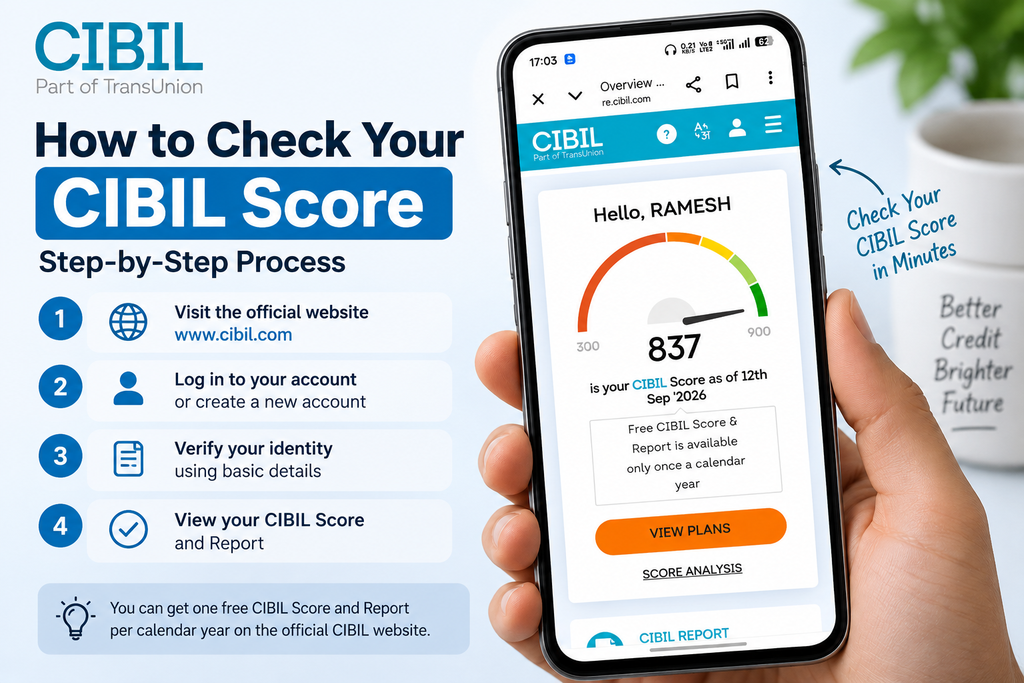
CIBIL currently provides consumers with one free CIBIL Score and Report per calendar year.
Checking your own score does not negatively affect your CIBIL Score.
Your CIBIL Report also provides additional information about your credit accounts, payment history and enquiries, making it useful for understanding your overall credit profile.
CIBIL Score vs CIBIL Report: What Is the Difference?
Although the terms are often used together, your CIBIL Score and CIBIL Report are different.
CIBIL Score:
A three-digit number between 300 and 900 that summarises your credit history.
CIBIL Report:
A detailed record of your credit history, including your credit accounts, payment information and credit enquiries.
Think of the CIBIL Score as a quick summary, while the CIBIL Report provides the underlying details.
What Does a CIBIL Score of 750 Mean?
A CIBIL Score of 750 is generally considered a strong score and can improve your chances of getting credit.
CIBIL has stated that 79% of loans are sanctioned to consumers with a CIBIL Score greater than 750. However, this does not mean that having a score above 750 guarantees loan approval.
Lenders may also consider your income, employment, existing liabilities, loan amount, repayment capacity and their own lending policies.
Does Checking Your CIBIL Score Reduce It?
No.
Checking your own CIBIL Score is considered a self-check and does not negatively affect your score.
However, when a lender accesses your credit report as part of a loan or credit-card application, that enquiry is recorded in your credit history.
How Long Does It Take to Improve a CIBIL Score?
There is no fixed period in which everyone’s CIBIL Score will improve.
The time required depends on your existing credit history and the factors affecting your score. If your score has been affected by late payments, high credit utilisation or other negative information, maintaining responsible credit behaviour over time can help improve your credit profile.
It is better to focus on consistently paying your dues on time, controlling your credit utilisation and avoiding unnecessary credit applications rather than trying to increase your score quickly.
Frequently Asked Questions
What is a good CIBIL Score?
CIBIL states that a score above 700 is generally considered good. However, lenders may use their own eligibility criteria, and a higher score generally improves your chances of approval.
What is the highest CIBIL Score?
The highest possible CIBIL Score is 900.
What is the lowest CIBIL Score?
The CIBIL Score range starts at 300.
Does a CIBIL Score guarantee loan approval?
No. Your CIBIL Score is only one part of the lender’s evaluation. The lender makes the final decision based on its own eligibility criteria and other financial information.
Does paying a loan on time improve CIBIL Score?
Making loan payments on time helps maintain a healthy credit history and can contribute positively to your credit profile. Late payments and defaults can negatively affect your score.
Does closing a credit card reduce CIBIL Score?
Closing a credit card can affect your credit profile depending on your overall credit history, available credit and other accounts. Before closing an old account, consider its role in your credit history and whether closing it is financially appropriate.
How often should I check my CIBIL Report?
Checking your report periodically can help you identify errors, unfamiliar accounts or enquiries. CIBIL currently offers one free CIBIL Score and Report per calendar year.
Final Thoughts
Your CIBIL Score is essentially a summary of your credit history and repayment behaviour. While there is no publicly available formula that lets you calculate the exact score yourself, understanding the major factors that influence it can help you make better credit decisions.
Paying your dues on time, keeping credit utilisation under control, avoiding unnecessary credit applications and monitoring your credit report are some of the most important habits for maintaining a healthy credit profile.
Remember that a good CIBIL Score can improve your chances of getting credit, but it never guarantees loan or credit-card approval. Lenders consider your complete financial profile before making their final decision.